


Rowan’s Law — Concussion Safety
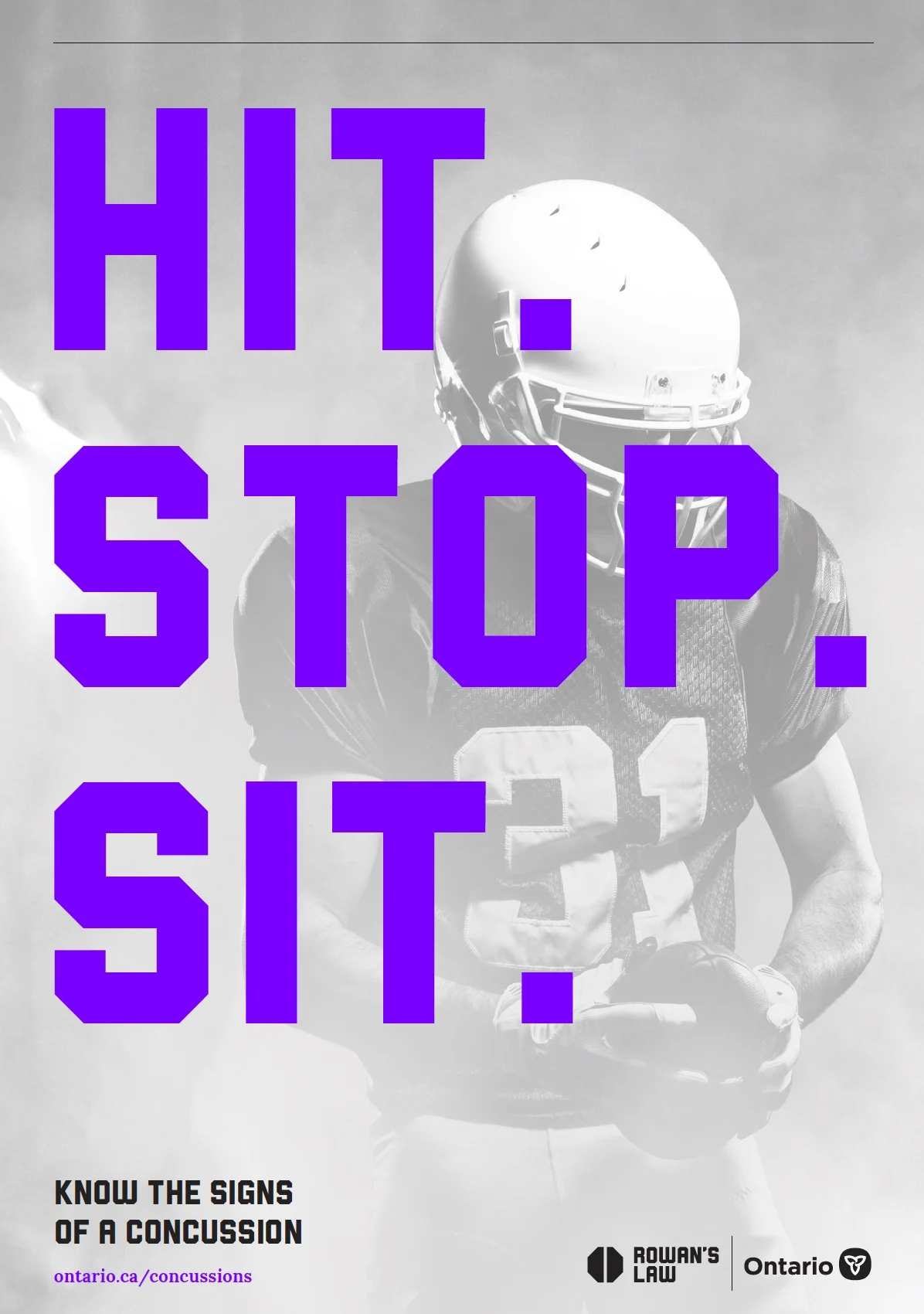
Rowan’s Law established provincially required concussion safety measures for sport. In Ontario, the initial requirements — including reviewing Concussion Awareness Resources and adopting a Concussion Code of Conduct — came into effect July 1, 2019. These measures remain mandatory for all curling clubs and facilities.
The legislation also requires organizations to implement clear removal‑from‑sport and graduated return‑to‑sport protocols for anyone suspected of having a concussion. While the implementation timeline was adjusted during the pandemic, these protocols are now expected and should be in place at every club.
What clubs must do now
- Ensure all staff, coaches, volunteers, and athletes have access to and have reviewed the provincial Concussion Awareness Resources.
- Adopt and post a Concussion Code of Conduct for participants, parents/guardians, coaches, and volunteers.
- Implement and follow a documented removal‑from‑sport and return‑to‑sport procedure whenever a concussion is suspected.
- Keep records of training, incident reports, and any return‑to‑sport clearances.
Resources and support
Curling Ontario provides guidance, templates, and links to the official provincial resources to help clubs comply. Visit the resources below for official materials, recommended procedures, and sample templates you can adapt for your club:
- Rowan’s Law & the Associated Regulation
- Rowan’s Law & Provincial Resources
- Concussion Awareness Resources
- Sample Concussion Code of Conduct
Taking these steps protects athletes and helps ensure a safe, informed, and legally compliant environment for everyone involved in curling.
FORMS & PROTOCOLS
Following your annual review of one of the Concussion Awareness Resources, you may wish to complete this optional form and provide it to your sport organization(s) as proof/confirmation of your review of a Concussion Awareness Resource.
This form might also be useful to you as a reminder to complete your review of one of the Concussion Awareness Resources again next year.
This form will not be saved by the Government of Ontario and the Government of Ontario assumes no responsibility for confirming that you have reviewed the Concussion Awareness Resources.
A sample template is provided here to assist sport organizations with developing a Concussion Code of Conduct. These templates address two specific classes of individuals:
- registering in a sport activity within the sport organization
- serving with the sport organization
Information about the specific requirements for the establishment and review of Concussion Codes of Conduct, are outlined in Rowan’s Law and its associated regulations.
The Rowan’s Law Removal-from/Return-to-sport requirements will come into effect on July 1, 2020. After this date, sport organizations will be required to have a removal-from/return-to-sport protocol.
A sample template from the Ministry of Heritage Sport Tourism and Culture Industries can be found here. Information about the specific requirements for the establishment of removal-from/return-to-sport protocols, are outlined in Rowan’s Law and its associated regulations.
The Ontario Curling Council’s Concussion Policy has been updated (summer 2020) and aligned with Curling Canada’s policy and Rowan’s Law Requirements. It is inclusive of Code of Conduct, Educational Resources, Removal from Sport and Return to Sport Protocols.
Curling Clubs are recommended to use this template to produce their own Concussion Policy Template.
The Ontario Ministry of Heritage, Sport, Tourism, and Culture Industries released the following FAQ documents:
Rowan’s Law – Overview of requirements and FAQs _FINAL_March_20
Rowan’s Law – FAQ Rowan’s Law Proclamation Date Change to January 1, 2022
In addition, the Ontario Curling Council has received clarification on several questions:
Question: Does a “designated person” need to be present in the club at all times?
Answer: As you are aware, every sport organization will be required to identify a designated person(s) as having specific responsibilities/duties under the removal-from-sport and return-to-sport protocols. Designated person(s) will have an important role in supporting the adherence of the protocols. A sport organization may identify more than one designated person(s), and the responsibilities for the designated person(s) may be shared between one or more individuals.
The legislation and regulation do not set out minimum qualifications for individuals who will be identified as designated person(s) under a sport organizations’ removal and return-to-sport protocol. The decision on who to identify as the designated person(s) is up to the sport organization. It is also up to the sport organization to ensure that each practice, training, or competition has someone who can act in the capacity of the designate, if the designated person is not available for a given practice, training or competition. The designated person(s) will have to confirm their review of the Minister approved Concussion Awareness Resources, within the previous 12 months prior to serving in this capacity.
Rowan’s Law applies to a sport organization (as defined in the Act) that carries out training, practice or competition in connection with one of the 65 amateur competitive sports listed in the regulation or their parasport equivalent. In the case for Curling – which is listed as one of the 65 amateur competitive sports in the regulation, a curling organization/club/league would be captured and required to comply with the requirements of the legislation and regulation if there is at least one individual under 26 years of age participating in a training, practice or competition. In other words, if a curling club offers programs for individuals under 26 years of age (i.e., curling for teens), then all the requirements of the Act apply – including the requirement to identify a designated person(s) as part of the removal-from-sport and return-to-sport protocols. If a club offers a mixed-age group program with individuals under and over 26 years of age, then the requirements of the legislation and regulation also apply. Programs where all participants are 26 years of age and up, would not be required to comply with the legislation and regulation.